Thursday, February 16, 2012

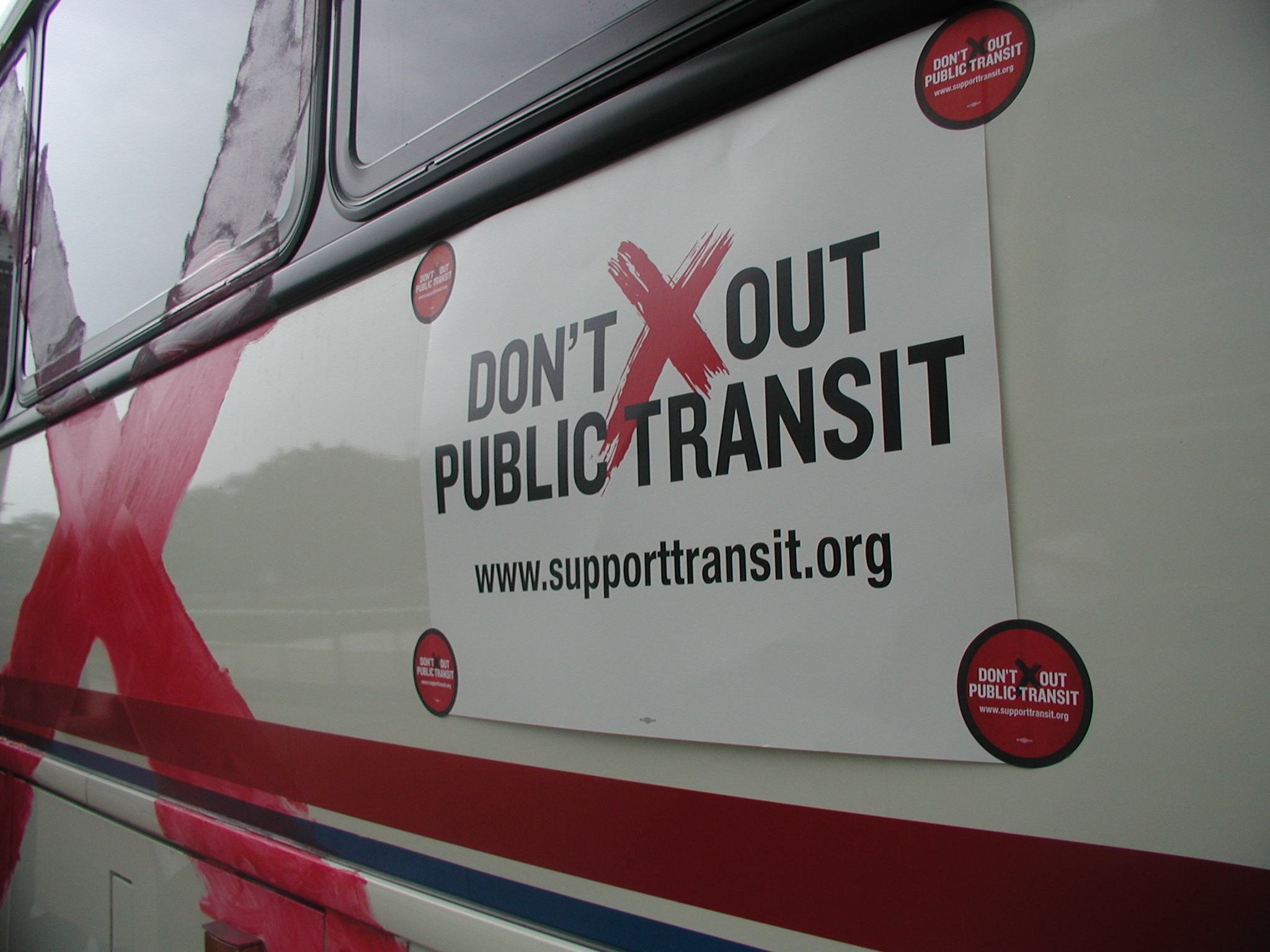
Federal Funding of Public Transit Takes Potential Turn for the Worse


The debate in Washington over federal funding for surface transportation programs is heating up, so I thought I would update you with regard to where everyone stands.

The House Republican proposal to fund surface transportation programs for five years was approved three weeks ago by the House Transportation and Infrastructure Committee. The full House is expected to consider the American and Energy Infrastructure Jobs Act later this month.

Sponsors describe the measure as “the largest transportation reform bill since the Interstate Highway System was created in 1956.” The bill aims to eliminate earmarks and to stabilize the Highway Trust Fund, sponsors say.

Read the Republican's position on the bill.

However, this proposal threatens funding for the nation’s transit systems, according to the American Public Transportation Association. A headline from an APTA release reads, “House Plan Puts Public Transit Projects in Jeopardy – Nearly 50 Percent of Revenue Currently Dedicated to Public Transit To Be Diverted.”

The "American Conservative Center for Public Transportation" joined the APTA in a joint statement today lamenting the potential undoing of 30 years of bipartisan support for public transit.

Finally, this past week the president released his own budget, which is "loaded with transportation funding." Actually, the president's proposal would improve the current 80-20 ratio of highway to transit funding to 75-25, with the Livable Communities program receiving $27 billion over six years.

Read about the President's transportation budget here.

Wednesday, February 8, 2012

Peer-to-Peer Car Sharing the Next Big Thing


When I decided to experiment with going car-less over a year ago, I was afraid to get rid of my car completely by selling it, so I decided to rent it to a friend for six months with the caveat that I could use it in case of an emergency. Little did I know I was at the forefront of a movement.
Peer-to-Peer car sharing is different from traditional car sharing like Zipcar in that it allows people to rent out their own vehicles to others at rates set by the car owners themselves. An article in Time this week explores the present state of peer-to-peer car sharing in particular the impact on the auto industry and traditional car sharing.
Author's note: Lanier Parking Solutions is a partner with Zipcar in the Atlanta market.

Friday, January 20, 2012

Managing Mixed-Use Parking Facilities Calls for TDM


I came to Lanier Parking 10 years ago to help take the company and the industry Beyond Parking by getting clients to see parking as one component of a much larger transportation system. A recent trade magazine story that I am quoted in clearly illustrates how we have done this. Case in point is Atlantic Station, the 138-acre mixed-use facility where Lanier has managed parking and transportation since it opened in 2005. Success has required far more than managing the massive, 7,200-space underground parking deck. Our Transportation Demand Management (TDM) programs have included alternative transportation, data collection, and structured pricing.

Read the NPA magazine story.

The story questions whether a TDM approach to parking management is good for the parking company's bottom line. I can testify that TDM is a key differentiating factor that helps Lanier get and keep clients.

Tuesday, January 10, 2012

Parking Lots: Possibilities Beneath the Surface


It is often said that the lowest and worst land use is surface parking. So why does the US have so much of it, and could it be used for something other than just parking? These are some of the questions that Michael Kimmelman asks in a New York Times article Paved, but Still Alive.
"There are said to be at least 105 million and maybe as many as 2 billion parking spaces in the United States. A third of them in parking lots, those asphalt deserts that we claim to hate but that proliferate for our convenience."
He goes on to explain that, at the very least, we should take these spaces more seriously, architecturally, and use them as public spaces. Kimmelman writes about Parking Day, a global event started around 2005 that invites anybody and everybody to transform metered spaces. For me it brings to mind Cyclovia, a world wide effort to turn streets into part-time passive parks part of the time.

In a competition to adaptively reuse shopping malls, Kimmelman cites one planning firm's approach to parking lots:
"Interboro noticed that the parking lot was quietly being used as a depot and stop by bus lines. A hot dog truck had set up shop there. Patrons at a drive-through McDonald’s ate in their parked cars. Truckers slept there overnight. The Fishkill flea market took over on weekends, and a graphic design firm and a couple of banks and a post-office processing center converted vacant mall stores into offices. In short, said Daniel D’Oca, one of Interboro’s partners, 'what looked dead wasn’t, but you would have missed it if you just passed by it with a predisposed idea about sprawl.'"

Tuesday, December 27, 2011

Undoing the Damage Done by Urban Freeways


The effort to remove or re-purpose existing freeways and heal the wounds they inflicted on cities continues with the near completion of park Madrid Rio in Madrid, Spain. Madrid Rio sits atop a six-mile stretch of tunnels that now house the old M-30 Freeway.

From yesterday's New York Times:
"All around the world, highways are being torn down and waterfronts reclaimed; decades of thinking about cars and cities reversed; new public spaces created."
New York City master planner Robert Moses famously drove freeways right through neighborhoods until urban activist Jane Jacobs stood up to him. Now, one of his creations, the Sheridan Expressway through the South Bronx, is closer to being torn down.

Thursday, December 22, 2011

Shopping Malls Using High Tech to Help You Find a Parking Space


During the holiday season, I start thinking a lot about retail parking. It is only during this time of year when the sea of asphalt around most malls and shopping centers fills up.

Meandering through a parking deck or lot trolling for a space wastes gas, causes pollution, and diminishes the shopping experience. With shopping centers earning 40% of their annual sales during the six weeks leading to Christmas, they have a strong incentive to make sure customers have a parking space when they arrive.

Malls are now using electronic signage, smart phone apps, and even Twitter to ease the pain of trying to find a spot.

Read about it in the Wall Street Journal.

Tuesday, December 13, 2011

Mass Transit Incentive to be Cut While Parking Incentive Stays the Same


Obscured in the debate over whether to extend the payroll tax cut is the possible loss of an incentive to take mass transit. If Congress takes no action (and it appears it won't), the tax-free fringe benefit for taking mass transit will be cut in half, while the benefit for driving to work stays the same. That sends a bad message.


Currently, your employer can give you up to $230/month pre-tax to cover your mass transit costs, the same as they can give you to pay to park your car. The transit benefit is set to go back down to $120 on January 1. That's where it was before the stimulus bill increased it to its current level. Granted, a monthly subway pass in many cities is less than $120 ($95 in Atlanta, $104 in New York City), but the monthly expense for commuter trains like the Long Island Railroad can run hundreds of dollars. The bottom line is cutting a benefit for commuting while leaving the parking benefit the same sends exactly the wrong message when policies should be encouraging people to leave their cars at or near their home.