Thursday, August 26, 2010

You think you have it bad


When I was a kid and I did not finish my vegetables, my parents would always remind me of the poor children starving in other parts of the world. Well now, parents who have children who complain about how long it takes to drive somewhere can say, "You are lucky you are not a child stranded in the 60+ mile traffic jam in China."
It appears China's new love affair with the auto combined with truck traffic has resulted in a 10-day traffic jam that may span into September. The WSJ reports that businesses popped up along the route to take advantage of the captive audience, and law enforcement was out in force to quell the unrest.
We in the United States have never experienced such a thing, and I hope we never will, but we certainly have felt the negative impact of our own love affair with the car, and it has resulted in new thinking around the way we develop and move around. For example, we have embraced mixed use developments that support alternative forms of transportation. The Chinese have their own ideas, and you can read about them here.

Monday, August 16, 2010

The Economics of Paid Parking

Here at Lanier, it is no surprise that we support the concept of paid parking. However, that is not only because our business is built on managing paid parking operations. Placing a monetary value on the availability of parking is also good for the environment, congestion and urban planning.
A recent article by Tyler Cowen, a professor of economics at George Mason University, makes the economic case for more paid parking.
"Is this a serious economic issue? In fact, it is a classic tale of how subsidies, use restrictions, and price controls can steer an economy in wrong directions. Car owners may not want to hear this, but we have way too much free parking."
Cowen points out that zoning laws often mandate ample parking at businesses, effectively subsidizing car trips that the free market would have discouraged.
"If developers were allowed to face directly the high land costs of providing so much parking, the number of spaces would be a result of a careful economic calculation rather than a matter of satisfying a legal requirement. Parking would be scarcer, and more likely to have a price — or a higher one than it does now — and people would be more careful about when and where they drove."
Donald Shoup, professor of urban planning at UCLA, explains that 99% of all vehicular trips in the United States end up in free parking. Professor Shoup has been arguing for paid parking for the better part of a decade and has written a book that I have previously discussed called "The High Cost of Free Parking."

Thursday, July 29, 2010

"First ring" suburbs no longer fit for walking


Excellent video about pedestrian safety and the built environment, in particular the "first-ring" suburbs. The focus is on Buford Highway in Atlanta, but this could be any suburban community in the United States.

These first ring suburbs were built 30 to 40 years ago to accommodate the first wave of urbanites escaping the trappings of the inner cities, and they relied exclusively on the automobile to get around. Once hot growth spots, many of these communities have found themselves aging and declining, threatened by the pull of newer, farther out suburbs and gentrified inner cities.

The population of these communities is now made up of the low-income families (largely elderly and immigrants), many of whom cannot afford automobiles. Over the years, transit has been laid on top of these commuter corridors making them less safe. Kudos to organizations like PEDS and many others who are working tirelessly to make them less dangerous.

Wednesday, July 21, 2010

China adopting alternative transportation solutions to meet crushing demand

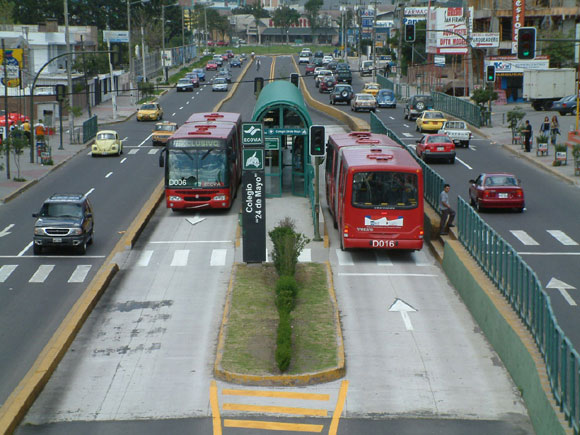
China is learning very quickly what it took the U.S. decades to realize. You can’t solve traffic problems only by building and widening roads. In a New York Times story this week, Chinese cities are using BRT (Bus Rapid Transit) systems with elevated stations and lanes dedicated to the buses. Interestingly, it was the U.S. based Institute for Transportation & Development Policy that suggested the idea to the southern Chinese city of Guanghhou.

"And they are not adopting necessarily the same model that the U.S. has adopted in trying to solve all their mobility needs through the construction of highways and increasing the capacity of their road network…” – said a transportation engineer.

Los Angeles runs a BRT system, and Seattle has a partial system. The Atlanta Regional Commission is planning a BRT system with dedicated lanes and light rail from the suburbs.

Wednesday, July 7, 2010

When crosswalks aren't enough, do more, not less


In a July 4 post, Atlanta columnist Maria Saporta, who was previously trained in urban planning, wonders about crosswalks and what they say about a city's commitment to a true pedestrian environment. Maria shows examples from around the world and brings her point home in Atlanta, where transportation engineers seem to treat pedestrians as second class citizens to the automobile.

Marie notes efforts by PEDS, a local pedestrian advocacy group that I chair, to fight a move toward removing crosswalks that aren't signalized.
...streets like Ponce de Leon could end up not having any crosswalks for blocks — a move that would increase jaywalking and the likelihood of accidents between pedestrians and cars. Certainly, that’s not a positive direction for us.
PEDS addressed the issue in a recent e-newsletter:
After reading GDOT's justification for removing a crosswalk on Roswell Road, we reminded District 7 engineer Bryant Poole that federal guidelines recommend that where crosswalks alone are insufficient to create safe crossings, transportation agencies need to do more, not less. High-speed multi-lane roads like Roswell Road account for 65 percent of all pedestrian fatalities nationwide. Removing crosswalks does not solve the problem of getting pedestrians safely across the street.

Instead of removing unsignalized crosswalks, we encourage GDOT to add rectangular rapid flash beacons. Following installation of these low-cost devices in St. Petersburg, Florida, driver compliance with crosswalk laws increased to 88 percent.

Monday, June 28, 2010

Should transit agencies sell naming rights to stations?

Should transit agencies be able to sell the naming rights to transit stations? This is a question being asked all over the U.S. as transit agencies struggle for money during these tough economic times. PhiladelphiaNew York, and Miami have agreed to rename their stations, and Detroit and Pittsburgh are considering it.

At first glance it seems like a no brainer. We sell the rights to sports facilities, so why not transit stations?

But nothing is as simple as it seems. Two very important issues that need to be addressed when considering selling the naming rights to transit stops:

  1. Is the name of a station supposed to indicate a geographic location to assist riders as opposed to a corporate logo?
  2. Isn't corporate influence in the public sector already at an all-time high, and does this not continue to blur the lines between public and private sector?

What do you think?

Friday, June 11, 2010

What is your state doing about texting while driving?

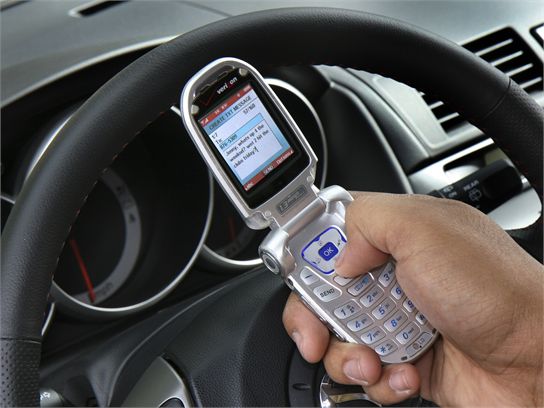
Ever since July 2009 when the Virginia Tech Transportation Institute confirmed what we already knew, that cell phone use (talking and texting) while driving is dangerous (4 times and 23 times more dangerous than not, respectively), the country has been grappling with what policies should be put in place to minimize this risk.

The federal government convened a Distracted Driving Summit, and through executive order made it illegal for truck drivers and federal employees to text and drive. States have followed suite with their own cell phone and texting laws, and the question is when will a nationwide ban occur.

Georgia recently took one step closer when Gov. Sony Perdue signed an anti-texting while driving bill. The new  law, effective July 1, prohibits drivers of all ages from texting while driving. Young drivers with provisional licenses are banned entirely from using cell phones behind the wheel. Violators can receive a penalty of up to $150 and one point on their driving record.

Find out what your state is doing here.